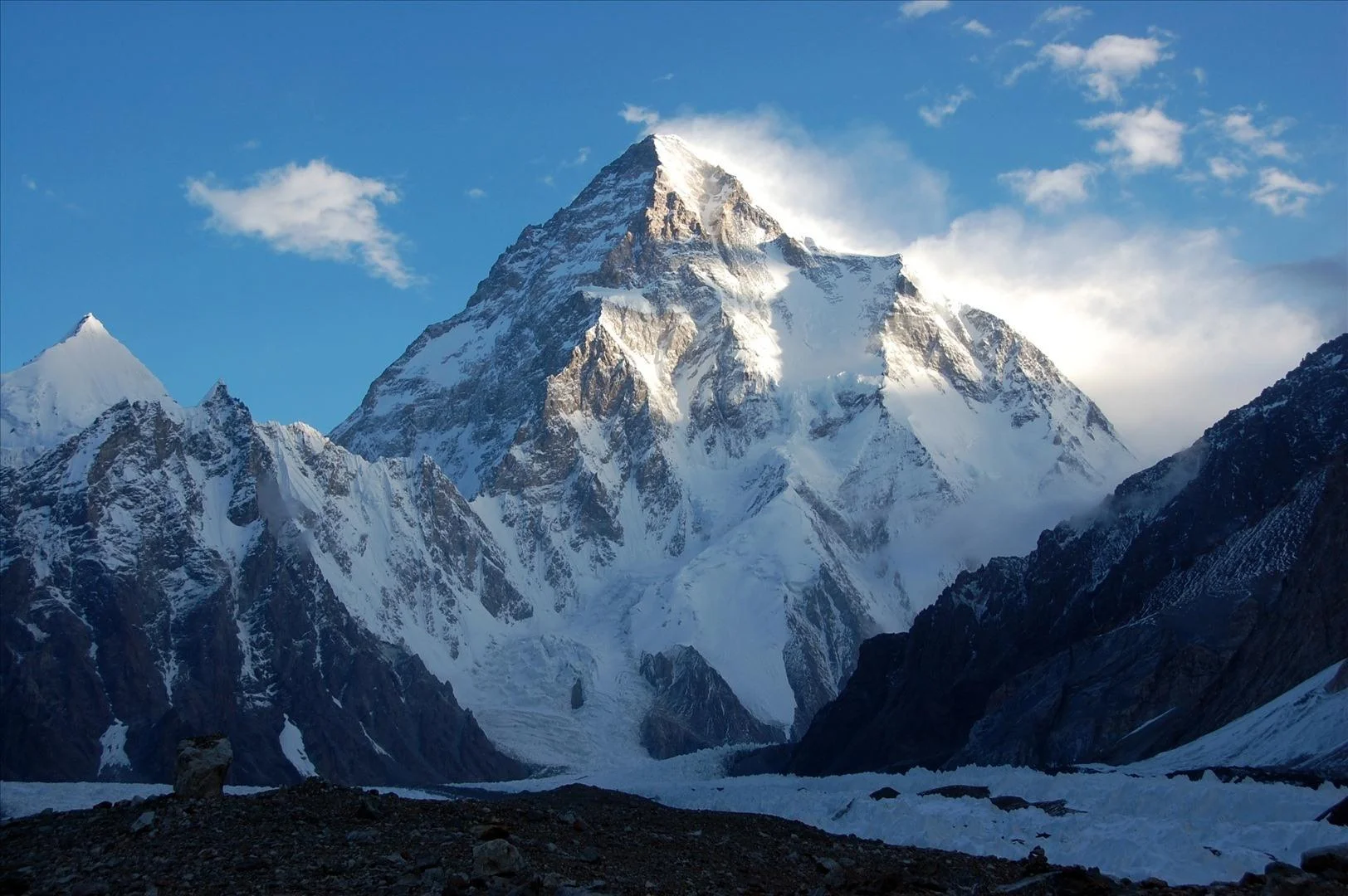
K2 (The Savage Mountain)
Range
Karakoram Range
Altitude
8611m
Difficulty
Hard

Explore Offline
Download the app for 3D offline navigation, interactive trail maps, and emergency SOS tools.


About K2 (The Savage Mountain)
Known as the "Savage Mountain," K2 is the second-highest mountain on Earth but arguably the hardest to climb due to its incredibly steep, pyramid-like rock faces, frequent avalanches, and unpredictable, deadly weather. The trek to its Base Camp via Concordia is often called the greatest mountain trek in the world.
Best time to visit
June, July, August
History & Significance
The mountain was given the surveyor's notation "K2" (Karakoram 2) by Thomas Montgomerie in 1856. It was first successfully summited on July 31, 1954, by an Italian expedition led by Ardito Desio, with climbers Lino Lacedelli and Achille Compagnoni reaching the top.
Places to See
The Baltoro Glacier, Trango Towers (massive, vertical granite spires), Concordia (the breathtaking "Throne Room of the Mountain Gods" where the Baltoro and Godwin-Austen glaciers meet), Broad Peak Base Camp, and the Gilkey Memorial (a poignant memorial for climbers who perished on K2).
Journey & Transport
How to Reach
By Air: Fly into Islamabad, then take a spectacular (but highly weather-dependent) domestic flight to the hub city of Skardu for more information. By Road: From Skardu, take a rugged, often terrifying 4x4 jeep ride for 6-8 hours through the Shigar Valley to reach the roadhead at Askole.
Important Notes
No Rescue Zone: Helicopter rescues above Base Camp are extremely rare and dangerous; self-sufficiency is absolutely mandatory. Winter Ascents: K2 was the very last 8,000-meter peak to be summited in winter (achieved by an all-Nepali Sherpa team in January 2021). Environment: Extreme cold, rockfall, and deep hidden crevasses make glacier travel dangerous even for Base Camp trekkers. Nearby police station: Skardu Police Headquarters / Shigar Police Checkpost Nearby hospital: Regional Headquarters (RHQ) Hospital, Skardu / Combined Military Hospital (CMH) Skardu
Facilities
- StayHigh-altitude expedition tents strictly. The entire 2-week trek to Base Camp takes place on moving glaciers with no permanent teahouses or lodges like you find in Nepal.
- FoodFully self-sustained expedition style. Expedition companies bring a massive convoy of porters and mules carrying weeks of food supplies. Cooks prepare meals in dining tents directly on the ice.
- WaterSourced entirely from glacial meltwater. It must be boiled and purified before drinking every single day.