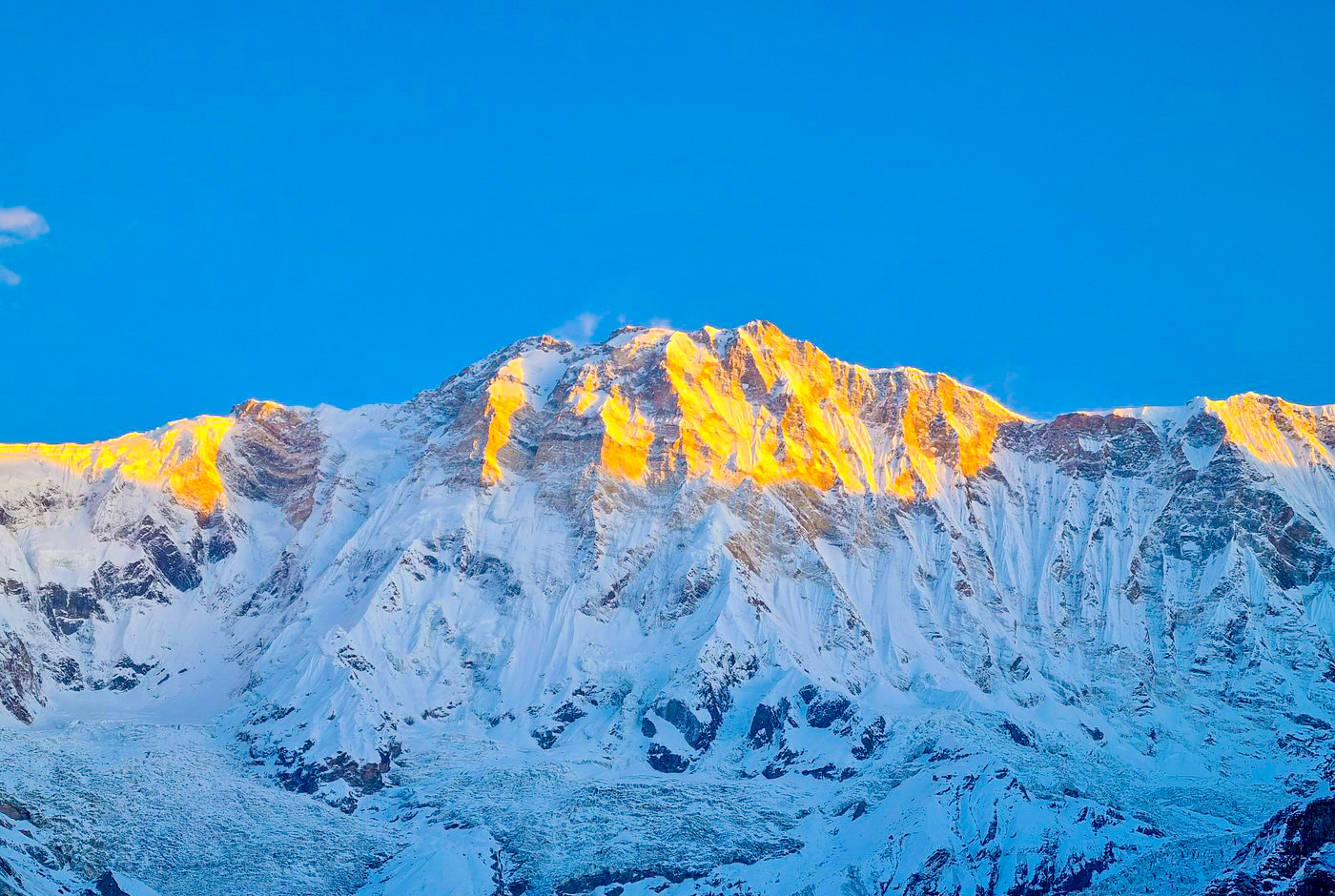
Mount Annapurna I
Range
Annapurna Massif, Himalayas
Altitude
8091m
Difficulty
Hard

Explore Offline
Download the app for 3D offline navigation, interactive trail maps, and emergency SOS tools.


About Mount Annapurna I
The 10th highest mountain in the world, Annapurna I is a massive, heavily glaciated peak notorious for its objective dangers. It features sheer ice walls, massive overhanging ice cliffs (seracs), and a highly volatile climate that makes every ascent incredibly perilous.
Best time to visit
April, May, September, October
History & Significance
Annapurna holds a monumental place in mountaineering history as the very first 8,000-meter peak ever successfully climbed. A French expedition led by Maurice Herzog and Louis Lachenal reached the summit on June 3, 1950, without supplemental oxygen.
Places to See
The treacherous North Face (the standard but avalanche-prone route), the near-vertical South Face (famous for extreme alpine-style ascents), the Miristi Khola gorge, and the sweeping views of the neighboring Dhaulagiri massif.
Journey & Transport
How to Reach
By Air/Road: Fly to Kathmandu, then travel to Pokhara. The Trek In: From Pokhara, drive to Tatopani or Lethe. The approach to the North Base Camp is a rugged, wild trek traversing the steep and unmaintained trails of the Miristi Khola valley, completely separate from the commercial ABC trekking route.
Important Notes
Avalanche Danger: The primary threat on Annapurna is unpredictable, massive avalanches that sweep the climbing routes regardless of technical skill. Self-Sufficiency: Helicopter rescues high on the mountain are nearly impossible due to the terrain. Gear: Requires absolute top-tier technical ice climbing gear and supplemental oxygen. Nearby police station: Tatopani Police Checkpost / Tourist Police Office, Pokhara Nearby hospital: Manipal Teaching Hospital, Pokhara (via helicopter evacuation) / CIWEC Clinic, Kathmandu
Facilities
- StayHigh-altitude expedition tents exclusively. Climbers rotate between Base Camp and Camps 1 through 4 to acclimatize before the summit push.
- FoodFully self-sustained. Expedition teams set up kitchen and dining tents at Base Camp. Above Base Camp, climbers rely entirely on high-calorie, freeze-dried meals, energy gels, and melted snow.
- WaterSourced purely from melting glacial ice and snow using portable stoves at all camps.